Leave Your Message
0%

When it comes to printing, picking the right materials can really make a difference in both quality and how smoothly your process runs. One key thing you don’t want to overlook is the kind of Thermal Printing Paper you go for. As more and more industries—think retail, logistics, healthcare—are leaning on high-quality thermal printing, it’s super important to understand the ins and outs of different Thermal Papers. That way, you can get the best results without too much hassle.

Choosing the right thermal paper isn’t just about grabbing whatever’s on sale. You’ve got to think about factors like paper size, how thick it is, and how sensitive it is to heat. All these little details actually matter a lot—they affect the clarity, how long the print lasts, and how well it performs overall. Luckily, with a bit of know-how, businesses can make smarter choices that boost their printing quality, save money, and keep things running smoothly.

In this guide, I’ll share some practical tips to help you pick the best Thermal Printing Paper for your needs. Whether you need something tough that can handle rough environments or just want top-notch print quality, I’ve got you covered with insights to help you make the right call for your thermal printing stuff.
Top Tips for Choosing the Best Thermal Printing Paper for Your Needs

Understanding Thermal Printing Paper and Its Uses

Thermal printing paper is a specialized type of paper that utilizes heat to produce images or text. This process relies on a thermal print head that applies heat to the paper coated with a special chemical that changes color when exposed to heat. The primary application of thermal printing paper includes receipts, tags, and labels, making it an essential material in various industries such as retail, logistics, and healthcare. Understanding the different types of thermal printing paper is crucial for optimizing printing quality and efficiency according to specific needs.

There are two primary types of thermal printing paper: direct thermal and thermal transfer. Direct Thermal Paper is sensitive to heat, producing images without ink or ribbons, but it is susceptible to fading over time, especially when exposed to light and heat. On the other hand, thermal transfer paper uses a ribbon that melts onto the paper when heated, allowing for higher durability and longevity of printed images. Each type serves distinct purposes, so evaluating your printing requirements, including exposure conditions and desired lifespan, will guide you in selecting the most suitable paper for your applications.

Key Factors to Consider When Choosing Thermal Printing Paper

When choosing thermal printing paper, it’s essential to consider several key factors that will ensure you select the right product for your specific needs. One of the primary considerations is the paper's coating type. There are generally two types: direct thermal and thermal transfer. Direct thermal paper reacts to heat, making it ideal for short-term applications such as receipts. In contrast, thermal transfer paper uses a ribbon to produce images, making it suitable for longer-lasting prints, perfect for labels or barcodes.

Another important factor is the paper's sensitivity and durability. High-sensitivity paper provides sharper and clearer prints but may fade faster when exposed to heat and light. If longevity is crucial for your project, opt for a more durable option. Additionally, consider the paper's size and thickness, as compatibility with your printer model is critical to avoid jams or poor print quality.

When selecting thermal printing paper, always check for compatibility with your printer’s specifications. Measure the width of your printer’s paper path to ensure a perfect fit. Also, evaluate your print volume and choose a paper grade that can handle your needs without constant replacement. These tips will guide you in making an informed choice for your thermal printing requirements.

Types of Thermal Printing Paper Available in the Market

Top Tips for Choosing the Best Thermal Printing Paper for Your Needs

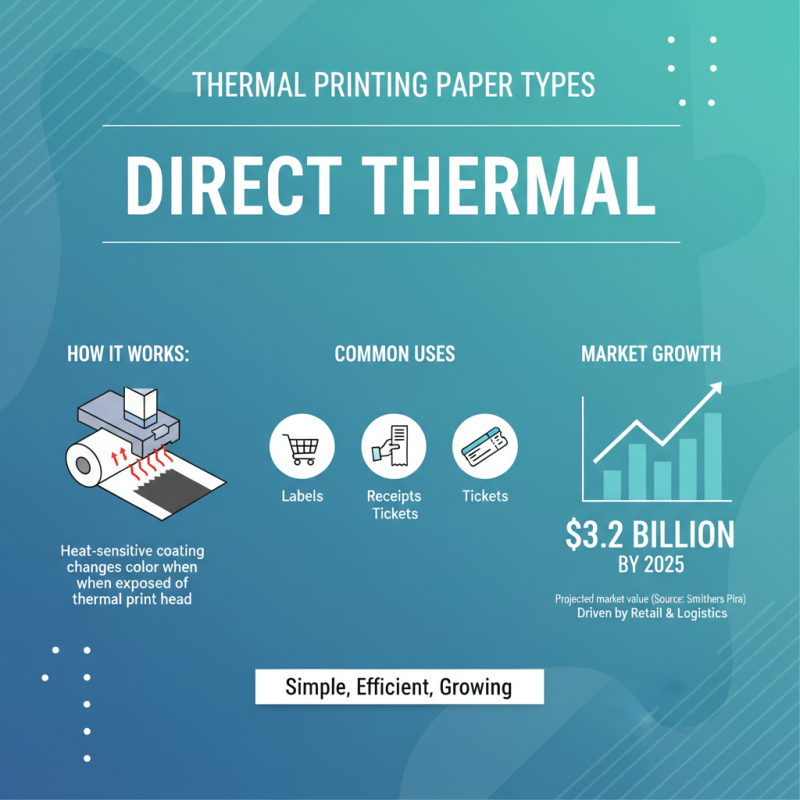
When considering thermal printing paper for various applications, it’s essential to understand the different types available in the market. The two primary categories are direct thermal and thermal transfer paper. Direct thermal paper is coated with a heat-sensitive material that changes color when exposed to a thermal print head. This type is often used in applications such as labels, receipts, and tickets due to its simplicity and efficiency. According to a report by Smithers Pira, the direct thermal paper market is projected to reach a value of $3.2 billion by 2025, driven by increasing demand in retail and logistics sectors.

On the other hand, thermal transfer paper requires the use of a ribbon that melts ink onto the paper when heat is applied. This type is typically more durable and resistant to fading, making it ideal for applications that require longevity, such as inventory labeling and asset tracking. As per a study by Freedonia Group, the demand for thermal transfer paper is expected to grow by 4.5% annually through 2024, largely due to increasing adoption in industrial settings where high-quality labels are essential.

Understanding these distinctions helps businesses select the appropriate type of thermal printing paper that suits their operational needs, ensuring efficiency and effectiveness in their printing processes.

Evaluating Thickness and Weight of Thermal Printing Paper

When selecting thermal printing paper, evaluating its thickness and weight is crucial for achieving optimal printing results. The thickness of the paper can impact not only the durability of the printed materials but also the efficiency of the printer. Thicker paper tends to produce sharper images and is less prone to tearing during the printing process. However, excessively thick paper may lead to feeding issues in some printers, so it's essential to find a balance that suits your specific equipment.

Weight is another important factor to consider. It directly relates to the paper's overall sturdiness and handling. Heavier paper usually provides a more professional feel and is more resistant to damage, making it a suitable choice for applications where longevity is essential. On the other hand, lighter paper may be more economical and sufficient for short-term uses. When choosing your thermal printing paper, consider the nature of your projects—whether they require high durability or if you are looking for cost-effective solutions.

Tip: Always check your printer’s specifications regarding the recommended thickness and weight of paper to ensure optimal performance. Additionally, it might be beneficial to request samples from suppliers to test the paper's compatibility with your printing needs before making a bulk purchase.

Assessing the Coating and Quality of Thermal Printing Paper

When selecting thermal printing paper, one of the most critical aspects to consider is the coating and overall quality of the paper. The coating directly impacts the print quality, durability, and performance of the thermal printing process. High-quality thermal papers generally feature a smooth, even coating that allows for sharper images and clearer text. This is essential for applications where legibility is paramount, such as receipts, labels, and barcodes. An optimal coating ensures that the print adheres well to the paper and does not smudge or fade over time, which can be particularly important in high-traffic environments.

Furthermore, the quality of the thermal printing paper can be assessed based on its sensitivity to heat and its thermal response. Papers that react well to heat will ensure quicker printouts and more efficient printing processes. It's advisable to check the paper's specifications for heat resistance and the type of thermal inks it is compatible with. Additionally, factors such as the paper's thickness and weight should be considered, as these can affect both the printer settings needed and the paper's performance in different environments. A thorough understanding of these elements will help you choose thermal paper that meets your specific printing needs effectively.

Top Tips for Choosing the Best Thermal Printing Paper for Your Needs

Paper Type Coating Type Brightness Weight (GSM) Durability Recommended Use
Standard Thermal Paper Single Layer High (90) 55 Low Receipts, Tickets
Heavyweight Thermal Paper Double Layer Very High (95) 70 Medium Shipping Labels, Invoices
Specialty Thermal Paper Waterproof High (88) 60 High Outdoor Use, Wet Conditions
Eco-Friendly Thermal Paper Natural Coating Medium (80) 50 Medium Retail, Environmentally Conscious Customers

Finding the Right Size for Your Thermal Printing Needs

When selecting thermal printing paper, one of the most crucial factors to consider is the size of the paper. The right size will depend on the specific requirements of your printing tasks. For instance, if you are printing labels for shipping, a larger width might be necessary to accommodate complete address information, while receipts may require a narrower format. Measuring the printer's compatibility with different sizes can help ensure that you do not encounter issues during the printing process.

Additionally, understanding the thickness of the paper is vital. Thermal printing paper comes in various thicknesses, which can affect print quality and durability. A thicker paper may be more suitable for products that require resistance to tearing or smudging, whereas standard thickness is often sufficient for everyday use. Evaluate the nature of the documents you will be printing and choose a size and thickness that align with your needs to achieve the best results.

Cost Considerations and Value for Money in Thermal Printing Paper

When selecting thermal printing paper, cost considerations are crucial in ensuring you get the best value for your investment. The price of thermal paper can vary significantly based on quality, brand, and specifications. To make a cost-effective choice, it's essential to compare prices among different suppliers while also evaluating the quality of the paper. A lower-cost option may seem appealing, but if the paper lacks durability or produces poor-quality prints, it can lead to higher long-term costs due to wastage and the need for reprints.

One tip for maximizing value is to choose thermal paper that is specifically designed for your printing equipment. Different printers may require different paper thicknesses or coatings, affecting print quality and performance. Additionally, consider purchasing thermal paper in bulk. Many suppliers offer discounts on larger orders, which can further reduce the overall cost per unit. By pooling resources with other users or businesses, you can also take advantage of bulk purchasing while sharing the benefits.

Lastly, always evaluate the total cost of ownership, which includes not just the purchase price but also factors such as storage, shelf life, and ease of use. High-quality thermal paper may have a higher upfront cost, but its longevity and reliability can save money in the long run. By prioritizing these aspects, you can ensure that you invest wisely in thermal printing paper that meets both your needs and budget effectively.

FAQS

: What is thermal printing paper?

: Thermal printing paper is a special type of paper that uses heat to produce images or text, relying on a thermal print head to activate a chemical coating that changes color when heated.

What are the main types of thermal printing paper?

The two primary types are direct thermal paper, which is sensitive to heat and does not require ink or ribbons, and thermal transfer paper, which uses a ribbon to create more durable prints.

How does the thickness of thermal printing paper affect printing?

Thicker paper generally produces sharper images and is less likely to tear, but too much thickness can cause feeding issues in some printers, so a balance is necessary.

Why is the weight of thermal printing paper important?

The weight influences the paper's sturdiness and handling. Heavier paper is more durable and professional-looking, while lighter paper is often more economical for short-term use.

How does the coating of thermal printing paper influence print quality?

The coating directly affects the print quality and durability; high-quality coatings allow for sharper images and clearer text, which is crucial for legibility in applications like receipts and labels.

What should I consider about the heat sensitivity of thermal printing paper?

The heat sensitivity of the paper impacts how efficiently it responds during printing; papers that react well to heat can provide quicker print times and better overall performance.

How can I ensure the right thermal printing paper for my printer?

Always consult your printer’s specifications regarding recommended paper thickness and weight, and consider requesting samples from suppliers to test compatibility before making a purchase.

What factors influence the longevity of printed images on thermal printing paper?

The type of paper (direct thermal vs. thermal transfer), the coating quality, and exposure conditions (like light and heat) all significantly affect the longevity of printed images.

What role does the quality of thermal printing paper play in high-traffic environments?

In high-traffic areas, high-quality thermal paper with a good coating is essential to prevent smudging or fading, ensuring clear and legible prints are maintained over time.

Conclusion

Choosing the right thermal printing paper is crucial for optimizing your printing processes, and understanding the different types and factors involved can significantly enhance your results. Thermal printing paper is widely used across various applications, from receipts to labels, and it is essential to consider attributes such as thickness, weight, coating, and overall quality when making a selection.

Evaluating the size requirements for your specific printing needs and balancing costs against the value provided by the paper are also important considerations. By assessing these factors carefully, you can ensure that you choose the best thermal printing paper that meets your unique requirements and delivers reliable performance.

Cassandra

Cassandra

Cassandra is a seasoned marketing professional at Tianjin Port Free Trade Zone Jingkuo International Trade Co., LTD, where she plays a pivotal role in promoting the company’s high-quality products. With an unwavering commitment to excellence, Cassandra ensures that every product meets stringent......
Previous Future Innovations in Receipt Roll Technology for Global Buyers