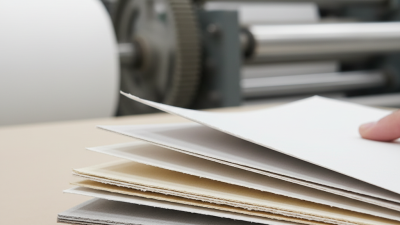
So, it’s pretty clear that the global demand for Offset Paperis just keepin' on climbing. Companies are really leaning into sustainability and top-notch quality these days, so finding trustworthy suppliers is more important than ever. Offset Paper isn’t just for one thing — it’s used for everything from printing books to marketing materials. And here’s the thing: each supplier has their little quirks and strengths, which kinda influences how buyers pick who to go with.
Some suppliers really shine when it comes to eco-friendly practices, while others might be better at delivering sharp, high-quality prints. Honestly, figuring out which one is the right fit can be a bit tricky. Prices range all over the place, delivery speeds differ, and customer support isn’t always consistent. It’s crucial to think about all these things before making a final call.
Getting a good grasp of the landscape of Offset Paper suppliers can help you navigate all these options without pulling your hair out. In this overview, we highlight some of the top players, but let’s be real — no supplier is perfect. Not every one will tick all your boxes, so it’s really about figuring out what matters most for your specific project and going from there.

Introduction to Offset Paper: Definition and Uses
Offset paper is a popular choice in the printing industry. It is known for its smooth finish and versatility. This type of paper is often used for books, magazines, and advertising materials. Its high-quality surface allows for vibrant printing and excellent color reproduction.
When selecting offset paper, consider the weight. Common weights range from 70gsm to 300gsm. The weight affects how the paper feels and how it interacts with printing inks. Heavier paper typically delivers better results for high-resolution images. Additionally, choose a suitable finish. Options include matte, gloss, or silk. Each finish serves a different purpose and can enhance the final product's appearance.
Tips: Test samples before making a bulk order. Different printers may yield varying results. Understanding your specific needs can help in selecting the right paper. Always check the specifications from suppliers. Look for reliable sources that provide consistent quality. Offset paper plays a crucial role in achieving professional results. Pay attention to all details for the best outcome.
Criteria for Selecting Top Offset Paper Suppliers
When selecting top offset paper suppliers, a few criteria stand out. Start by evaluating production capacity. A supplier with high throughput can meet urgent demands. In a recent industry report, over 70% of large buyers prioritized this. Look for suppliers who can scale their output without compromising quality.
Quality assurance is essential. Accredited suppliers often adhere to international standards. This includes ISO certifications. Such certifications ensure that Paper Bond Paper meets consistent quality benchmarks. Even minor variations in quality can impact final products. Moreover, suppliers should provide clear documentation of their quality control processes.
Transparency in sourcing is another important factor. Sustainable practices are increasingly vital to buyers. A report noted that approximately 60% of companies prefer suppliers using eco-friendly materials. This reflects a broader commitment to social responsibility. Suppliers who openly share their sourcing details build trust. However, it’s essential to verify claims. Misleading information can undermine long-term relationships. Engaging with suppliers directly can help clarify their practices and commitments.
Overview of the Global Offset Paper Market Trends
The global offset paper market is evolving rapidly. Increased demand for eco-friendly products influences production trends. Many manufacturers now focus on sustainable practices. This shift aligns with growing consumer awareness. Businesses are more inclined to adopt green solutions.
In recent years, the market has seen fluctuations. Rising costs of raw materials pose challenges for suppliers. Some companies struggle to maintain competitive pricing. Yet, innovation remains a key driver. Many businesses invest in advanced technologies to improve efficiency. This allows them to offer high-quality products while minimizing waste.
However, not all developments have been positive. The pandemic affected supply chains significantly. Some regions experienced delays in production and shipping. Buyers need to address these uncertainties. Monitoring market trends is crucial. Adapting to changes ensures a steady supply of offset paper. Staying informed helps businesses make better purchasing decisions.
Detailed Profiles of the Top 10 Offset Paper Suppliers
When exploring suppliers for offset paper, buyers look for reliability and quality. The market has numerous companies, yet only a few stand out based on experience and service. Each supplier often specializes in different types of paper, including options for Photo Paper. This specialization helps meet various needs in the printing industry.
A common challenge buyers face is finding suppliers who can consistently deliver high-quality products. Many suppliers promise excellence but fail to meet deadlines or specifications. Checking a supplier's track record is crucial. Buyers should seek detailed profiles and reviews from past clients to gauge reliability.
In addition, pricing structures can vary significantly. Some suppliers offer competitive rates but compromise on quality. It's essential to balance cost with the need for superior materials. For instance, while seeking photo paper, the focus should be on both price and print quality. This balance often requires careful consideration and sometimes leads to tough choices.
Comparison of Pricing and Quality Among Leading Suppliers
When examining the offset paper supply landscape, pricing and quality are crucial factors for global buyers. A recent industry report highlights that the price variance among leading suppliers can reach 20-30%. This range often depends on the supplier's production scale, sourcing strategies, and material quality. Buyers need to evaluate not just the cost, but also the grade of paper and its suitability for various printing needs.
Quality assessments show that 70% of industry leaders emphasize sustainability in their production processes. More than 60% of buyers now consider eco-friendly practices a priority. However, not all certified suppliers deliver consistent quality. Some may offer lower prices but compromise on durability or brightness. This can lead to increased reprints, negating any initial savings.
The decision-making process can be complicated. For instance, a recent analysis found that while low-cost suppliers may appeal to budget-conscious buyers, their products often lack longevity. In contrast, higher-end suppliers typically provide better quality but at a steeper price. Balancing these factors is complex and requires careful consideration of long-term implications on production efficiency and end-user satisfaction.
Sustainability Practices of Offset Paper Suppliers
Sustainability is a growing concern in the offset paper industry. Many suppliers are now adopting eco-friendly practices to meet global standards. According to a recent report from the Forest Stewardship Council, certified sustainable sourcing can reduce deforestation by 30%. This is crucial for the environment and for industries reliant on resources like A4 Paper.
Several offset paper suppliers are shifting towards recycled materials. This change not only minimizes waste but also lowers energy consumption during production. Reports indicate that using recycled fibers can save up to 60% of energy compared to virgin fiber production. However, challenges remain. Some suppliers struggle to maintain consistent quality while using recycled inputs.
Another critical aspect is the carbon footprint of paper production. The Carbon Trust highlights that the paper industry accounts for 2% of global greenhouse gas emissions. Addressing this issue is vital. Suppliers must focus on transparent reporting and innovative technologies. While many are making strides, not all are equipped with the necessary resources or knowledge. This gap hampers progress toward sustainability in the offset paper sector.
Future Outlook for Offset Paper Supply Chain in Global Markets
The offset paper supply chain faces numerous challenges as global markets evolve. Analysts predict a shift in demand dynamics over the next five years. The global offset paper market is projected to grow at a CAGR of approximately 2.5% from 2022 to 2027. This growth is driven by increased demand from the printing industry, particularly for durable and high-quality Dtf Paper.
Market fluctuations and supply chain disruptions due to geopolitical tensions present significant risks. Disruptions caused by the pandemic have exposed vulnerabilities in sourcing and logistics. Suppliers must adapt quickly, focusing on sustainable practices. The rise in digital media also poses a challenge. Offset paper producers must innovate to meet changing consumption patterns.
Future forecasts suggest a growing emphasis on eco-friendly materials. As buyers increasingly seek sustainability, suppliers must adapt their offerings. Failing to consider these factors might limit opportunities for growth. Companies that strategically build resilience into their supply chains are likely to outperform their competitors. They will be better positioned to capitalize on the shifting landscape of the offset paper market.
Top 10 Offset Paper Suppliers - Market Share Overview
Achieving Vivid and Lasting Impressions: The Benefits of Premium Coated Paper for Your Printing Needs
When it comes to printing high-quality materials, the choice of paper can significantly impact the final output. Achieving vivid and lasting impressions is pivotal, and premium Coated paper stands out as an exceptional option for professionals and enthusiasts alike. With cutting-edge coating technology, this type of paper ensures that ink adheres perfectly, resulting in strikingly vibrant colors that leap off the page. According to industry studies, colors printed on premium coated surfaces can appear 30% more vibrant compared to uncoated paper, making it the ideal choice for marketing brochures, catalogues, and photo albums that demand attention.
One of the standout features of premium coated paper is its smooth surface, which enhances the sharpness of text and graphics. This attribute is crucial in eliminating any blurriness, allowing every detail to be captured with incredible accuracy. Research from the Printing Industries of America indicates that a smoother finish can improve readability by up to 25%, a key factor for effective communication in printed materials. Additionally, this paper's compatibility with major printing methods, from offset to digital, makes it an incredibly versatile option for various applications, catering to the needs of both professional print shops and hobbyists.
Investing in premium coated paper is not just about aesthetics; it's about delivering quality that can be seen and felt. The results are clear: when using this high-caliber paper, prints not only look spectacular but also leave a lasting impression. With the right materials, the possibilities are endless, transforming ordinary prints into extraordinary experiences that engage and captivate audiences.
FAQS
: Buyers should prioritize reliability and quality. It's vital to check the supplier's track record.
Reviews help gauge a supplier's reliability. They provide insights into the quality of service and products.
Pricing structures vary widely. Some low-cost options may compromise on quality, affecting overall satisfaction.
The industry faces supply chain disruptions and changing demand due to geopolitical tensions and pandemic impacts.
The market is projected to grow at a CAGR of approximately 2.5% from 2022 to 2027.
Digital media rises create challenges for suppliers. They must innovate to adapt to changing consumption patterns.
Sustainability is increasingly sought after. Suppliers must adapt to eco-friendly trends to meet buyer expectations.
Ignoring changes can limit growth opportunities. Companies that adapt will likely outperform their competitors.
Buyers should balance price with print quality. This often requires careful consideration and tough choices.
Suppliers should focus on sustainable practices and adapt their offerings to meet market demands effectively.
Conclusion
The article "Top 10 Offset Paper Suppliers for Global Buyers" provides a comprehensive overview of offset paper, highlighting its definition and various applications. It outlines key criteria for selecting top suppliers, including product quality and sustainability practices, which are increasingly important in today's market. The piece delves into current trends in the global offset paper market, presenting a detailed profile of the leading suppliers and offering a comparison of pricing and quality.
Additionally, the article emphasizes the sustainability efforts undertaken by these suppliers, reflecting the industry's commitment to environmentally responsible practices. It concludes by discussing the future outlook for the offset paper supply chain, indicating potential changes and developments that global buyers should anticipate. Overall, this piece serves as a valuable resource for those seeking reliable offset paper suppliers in an evolving marketplace.